
When Home Becomes a Memory
How Venezuelan artists are processing the world's largest diaspora
In a black-and-white music video filmed in the margins of Brooklyn, New York, a Venezuelan folk melody drifts over a video that opens with a woman walking down train tracks in a decrepit industrial neighborhood. The voice belongs to Pía Páez, a Venezuelan singer, songwriter and producer based in New York City, whose song "Tonada del Caminante" narrates the story of an anonymous migrant who walked hundreds of miles to reach another country. The sound is unmistakably from Los Llanos — the vast Venezuelan flatlands associated with rural life and cowboy culture — yet the landscape onscreen is decidedly urban, deteriorated, and far from home. This tension between sound and image is not accidental. It is, according to researcher Diego Maggi, a precise artistic expression of a fractured national identity.
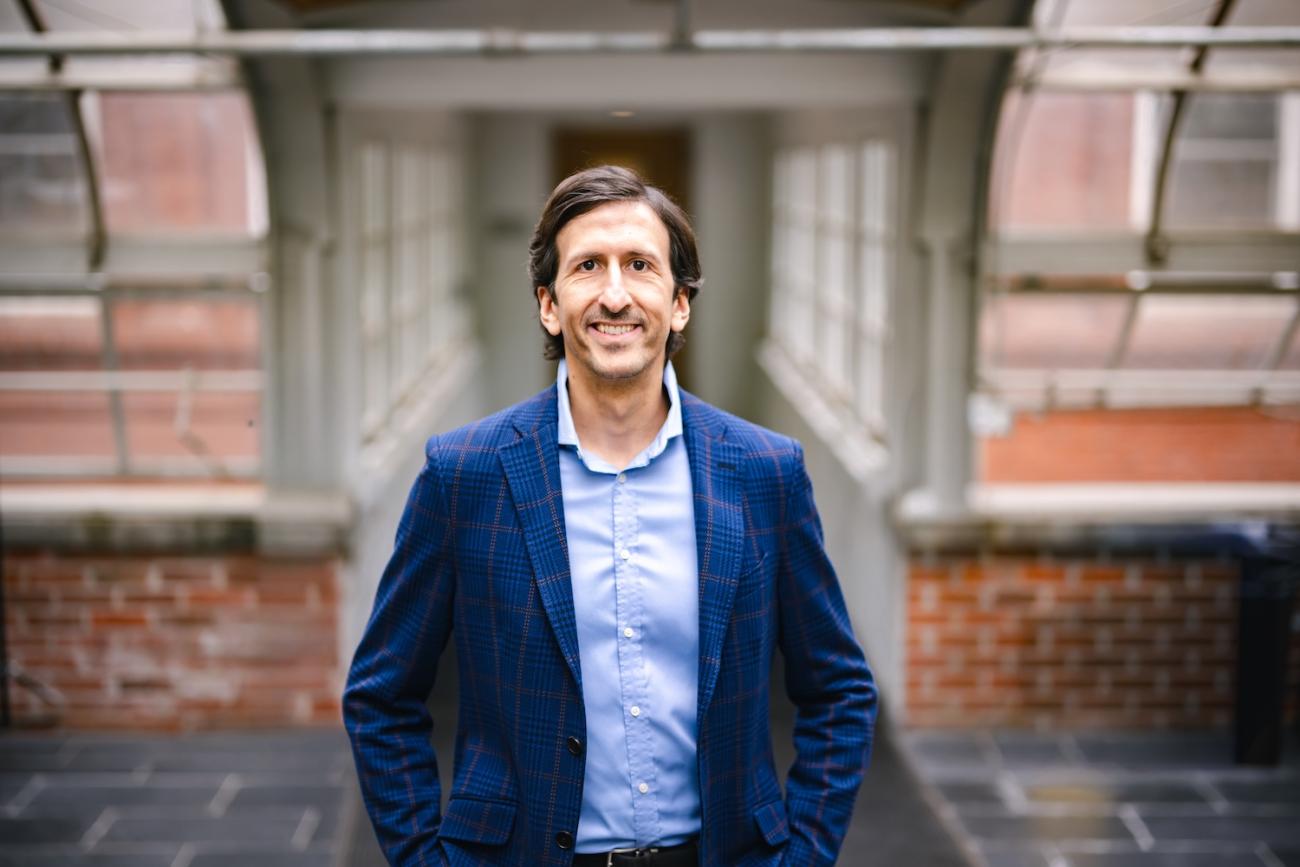
Maggi, a scholar of literature and audiovisual arts whose scholarship spans Venezuela and Colombia, has spent nearly a decade studying how novelists, filmmakers, and musicians represent the emotional and cultural experience of Venezuelan migrants. His work-in-progress book examines six works produced between 2010 and 2020. The three novels, two music videos, and a film ask a deceptively simple question — what does nostalgia mean when you can no longer go home?
The Scale of a Crisis
To understand why this question matters, it helps to grasp the magnitude of Venezuelan migration. As of late 2025, roughly eight million Venezuelans, approximately three out of every 10 citizens, were living outside their country, according to the United Nations High Commissioner for Refugees. More than six million reside in Latin America and the Caribbean. In Spain alone, nearly 25,000 Venezuelans arrived in just the first quarter of 2025. The Venezuelan diaspora represents one of the largest displacement crises in the world, comparable in scale to those produced by the wars in Syria and Ukraine with the significant distinction that Venezuela has not been at formal war for more than a century.
The crisis has its roots in the political and economic unraveling that accelerated under Hugo Chávez and his successor Nicolás Maduro. A country once buoyed by enormous oil wealth experienced catastrophic hyperinflation between 2017 and 2021, and the national currency lost value rapidly. Oil dependency, Maggi argues, is structural. Venezuela has historically swung between abundance and collapse in direct proportion to global petroleum prices, a cycle unlikely to break soon.
Two Migrations, Two Nostalgias
Maggi, assistant professor of Spanish in the Department of Modern Languages and Literatures, draws an important distinction between two distinct waves of Venezuelan emigration. This division shapes both the sociology of the crisis and its cultural representations. The first wave, running roughly from 2000 to 2016, was predominantly middle- and upper-class. These were professionals, university graduates, and entrepreneurs who left seeking better opportunities and different governance, often with resources that allowed for relatively stable resettlement. By the end of this period, around one million Venezuelans were living abroad.
The second wave, beginning around 2017, was strikingly different in character. This migration was driven by desperation rather than ambition, involving people from Venezuela's poorer population who often had no means of transportation beyond their own feet. Photographs and videos circulated on social media showing Venezuelan families, sometimes with young children, crossing the treacherous Darién Gap between Colombia and Panama, traversing the Atacama Desert in Chile, or approaching the United States border through Mexico. The humanitarian stakes were categorically higher.
This bifurcation is reflected in the cultural works Maggi analyzes. The novels in his study, including Eduardo Sánchez Rugeles's Blue Label/Etiqueta Azul and Karina Sainz Borgo's La hija de la española, tend to center middle-class experiences of political alienation and national identity, addressing a readership with the leisure and literacy to engage with literary fiction. The music videos and film, by contrast, reach broader and more popular audiences, and increasingly represent the harder realities of mass, working-class displacement.
Nostalgia as a Double-Edged Sword
Central to Maggi's framework is an understanding of nostalgia not as simple sentimentality but as a politically and psychologically complex phenomenon. He draws on cultural theorist Svetlana Boym's distinction between two types, restorative nostalgia and reflexive nostalgia. Restorative nostalgia is characterized by a desire to literally reconstruct the past, to restore a lost golden age frequently deployed in nationalist political movements. Reflexive nostalgia, by contrast, involves acknowledging that the past cannot be recovered, but finding in memory a resource for adaptation and meaning-making in the present.
“Nostalgia is like a double-edged sword,” says Maggi. “Nostalgia can be used as a nationalist movement or sentiments against some groups in a society, but for migrants nostalgia is important to create a sense of belonging. In a way nostalgia gives them hope, identity, and motivation to deal with the challenges of their daily life in another country.“
Maggi observes that past political crises intensified nostalgia rather than diminish it. Works produced in the years following 2017 increasingly idealize a pre-Chávez Venezuela, romanticizing a past that earlier artistic representations had regarded with far more ambivalence or critique. It seems that crisis rewrites collective memory.
Aural & Visual Identity
One of the most compelling aspects of Maggi's methodology is his insistence on treating each artistic medium — novel, music video, film — on its own aesthetic terms. When analyzing Páez's "Tonada Del Caminante," he does not simply read it as a text about migration; he examines how the relationship between sound and image generates meaning. The melody evokes a rural, idealized homeland; the Brooklyn streetscape communicates displacement and urban instability. Maggi notes that the tension between the two is precisely the point. It enacts the conflict between an imagined national identity and the material reality of migrant life.
This kind of analysis extends to Reymar Perdomo's semi-fictional 2018 music video "Me fui," in which the artist narrates her own migration experience but incorporates scenes that did not actually occur. The work blends autobiography with aesthetic conventions borrowed from melodrama, Maggi says. The result occupies a hybrid space between testimony and fiction, complicating easy categories of documentary truth.
Maggi situates the Venezuelan diaspora within a longer and broader Latin American tradition of politically produced exile and migration. His future research aims to develop comparative analyses that place Venezuelan migration narratives alongside artistic representations of Cuban exile, Chilean exile under Pinochet, and Argentine exile during the 1970s military dictatorship. Each case involves authoritarian governance producing mass displacement. Each has generated a rich artistic response that both documents and processes the experience.
“When I analyze each genre, I consider the aesthetic elements of cinema, music, and video, so I'm very rigorous about analyzing a film, talking about the film language, shots, camera angles,” Maggi says, "If I analyze a music video, I assess how the image connects with the sound. I try to aesthetically analyze each genre. I look at how these narratives are similar, are different, what topics, how the conditions of each country, such as authoritarianism or economic situation, impact these narratives.”
What these varied cases share is the use of art as a site where migrants negotiate the competing demands of memory and the present, homeland and host country, the self that left and the self that continues, Maggi says. From Páez’s Brooklyn to Salas Hernández’s reimagined suffering Bolívar, nostalgia emerges not as a frailty, but as the essential work of remaining human. It is the complex work of displacement, a task still being carried out by the millions of Venezuelans now scattered across the globe.